

Highlights
Modern attacks extend beyond email, making voice, SMS, and deepfakes essential test channels.
Most HRM platforms still lack unified AI agent risk, despite delegated access becoming commonplace.
Passive telemetry alone can't validate risk, requiring realistic multi-channel attack simulations.
Best Fable Security Alternatives and Competitors (2026)
Human risk doesn't stop at the inbox. If you're evaluating Fable Security alternatives, you already know that:
Fable built its platform around behavior-shaping interventions pulled from identity, cloud, and productivity signals, but security teams are also fighting deepfake voice calls, smishing, and now AI agents acting on employees' behalf.
This guide breaks down where Fable fits, where it doesn't, and which of the 8 alternatives below are worth a second look if you need coverage that goes past email.
What to Look For in a Fable Security Alternative
Before comparing vendors, it helps to know what actually separates them. The platforms below vary across a few dimensions worth scoring against your own requirements:
Attack surface coverage: Does the platform test email only, or does it run simulations across SMS, voice, and deepfake channels too?
Simulation vs. passive signals: Is risk inferred from existing security telemetry, or actively tested through realistic, adaptive attacks?
Agent and AI risk: Can the platform extend its risk model to AI agents acting on an employee's behalf, or is it scoped to human behavior only?
Unified risk scoring: Does each person get one continuous risk score across channels and identities, or separate scores per tool?
Reporting and compliance fit: Board-level reporting, audit trail, and integration depth with your existing GRC and IDP stack.
Top 8 Fable Security Alternatives in 2026
Platform | Category Focus | Attack Surface Coverage | Simulation Approach | Agent/AI Risk |
Cimento | Human Risk Management (HRM) | Email, SMS, voice, deepfake | Active, adaptive multi-channel simulation | Extends the same per-person model to AI agents |
KnowBe4 | Security Awareness Training / HRM | Primarily email, expanding | Scheduled phishing campaigns | Recently launched agent-risk messaging (Agent Risk Manager, AI Defense Agents) |
Hoxhunt | Human Risk Management | Email-centric | AI-personalized micro-simulations | Not a core focus |
Adaptive Security | Human Risk Management | Deepfake-focused | AI-generated deepfake and phishing simulations | Emerging focus area |
SoSafe | Security Awareness Training / HRM | Email, some SMS | Phishing simulation platform | Not a core focus |
Proofpoint | Security Awareness Training / HRM | Email-centric, threat-intel-informed | Threat-intelligence-driven phishing simulation | Not a core focus |
Huntress | Managed Security / SAT | Email, some vishing content | Fully managed phishing simulation, MSP-oriented | Not a core focus |
Abnormal Security | Email Security | Email and connected SaaS apps | Behavioral AI detection rather than simulation | Emerging (AI Phishing Coach) |
1. Cimento
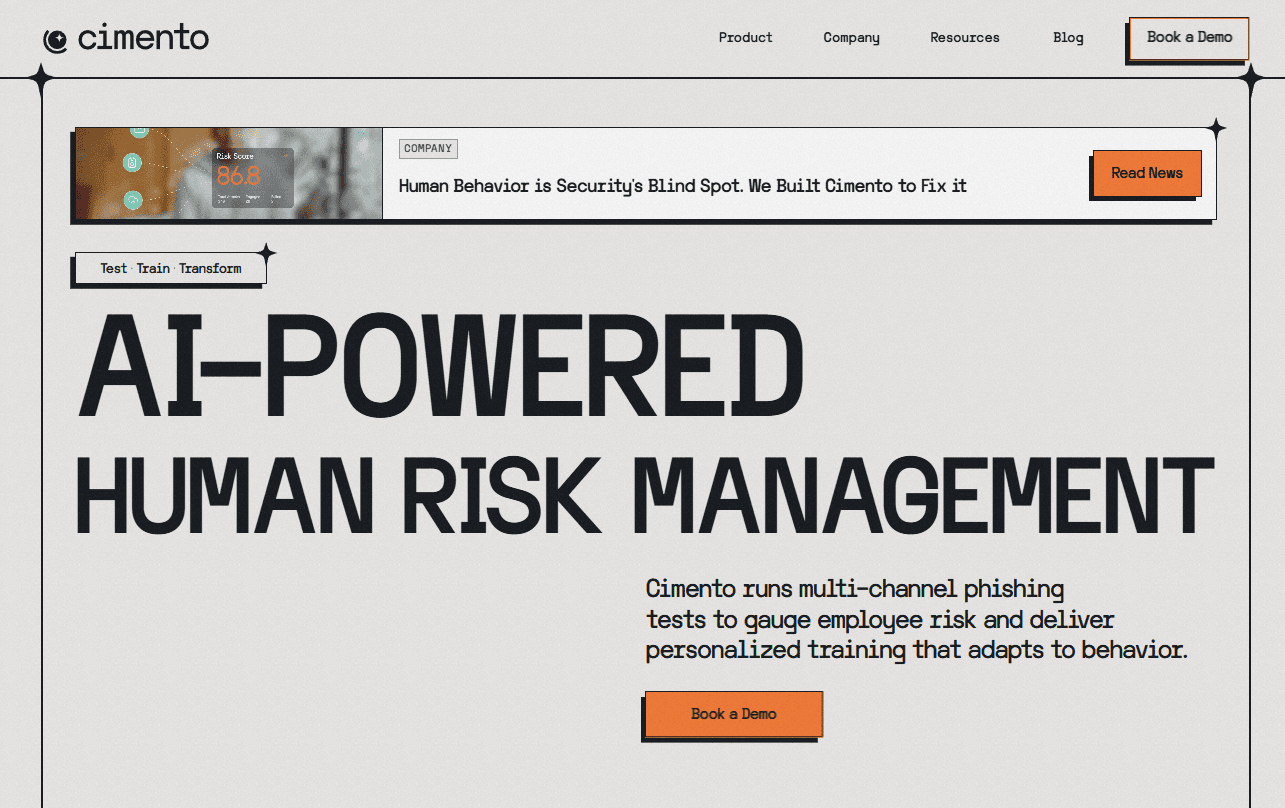
Cimento runs adaptive social engineering simulations across email, SMS, voice, and deepfake channels, building a continuously updated risk profile for each employee based on how they actually behave under simulated pressure.
Here’s what you can do with Cimento:
Integration and risk mapping. Cimento connects to a company's HRIS, SIEM, and existing security tools, using that data to map each employee's risk based on role, behavior, and knowledge, rather than treating every employee as the same risk profile.
Multi-channel, multi-turn simulation. The platform runs phishing simulations across email, SMS, and voice, enhanced with AI-generated deepfake content, with scenarios that adapt based on role, behavior, and current attack patterns. Rather than testing with a single email, Cimento also runs multi-step sequences that unfold across multiple touchpoints, reflecting how real multi-turn social engineering attacks actually play out over several messages rather than one.
Living, continuously updated risk scores. Each employee gets a dynamic risk score that updates based on simulation results, behavior patterns, and signals pulled from the rest of the security stack.
AI-generated, adaptive training. Instead of standard-length compliance videos, Cimento's LLM engine generates short, 60 to 90 second training modules tailored to an employee's role, risk level, and what they just experienced, delivered right after a simulation or right before a flagged high-risk action. Security teams can also describe a scenario and have Cimento generate a production-ready training module directly, without maintaining a static content library.
Automated response. Beyond surfacing risk, the platform can automatically adjust simulations, assign training, or restrict access for high-risk users without manual intervention.
Agent security assessment. Cimento also runs adversarial tests against a company's deployed AI agents, probes for vulnerabilities, and auto-generates hardening fixes.
2. KnowBe4

The longest-established name in security awareness training, KnowBe4 has broadened beyond scheduled phishing campaigns and recently introduced agent-risk messaging of its own. It's a reasonable fit for teams that want a mature, well-documented platform with a large training content library, though its roots are in campaign-based email simulation rather than continuous multi-channel testing.
Where it falls short: Coverage is still primarily built around scheduled email campaigns rather than continuous, multi-channel testing across SMS, voice, and deepfake. Agent-risk features are newly launched rather than a mature part of the platform.
Ideal for: Teams that want a well-established, content-library-heavy platform and are comfortable managing simulations on a campaign basis.
3. Hoxhunt
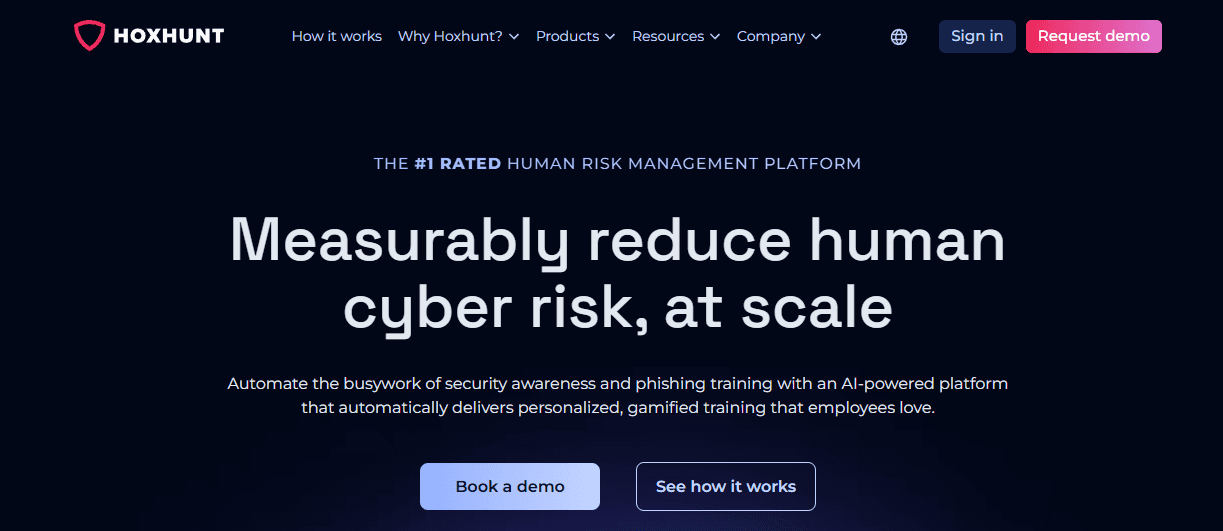
Hoxhunt positions itself as a Human Risk Management (HRM) platform built around AI-personalized micro-training and gamified engagement. It's strong on employee engagement metrics and behavior change tracking, with a heavier emphasis on email-based simulation than on voice or deepfake attack vectors.
Where it falls short: Simulation coverage leans email-centric, with less depth on voice, SMS, or deepfake attack scenarios. No unified agent-risk model.
Ideal for: Organizations prioritizing employee engagement and gamified training completion over broad attack-channel coverage.
4. Adaptive Security
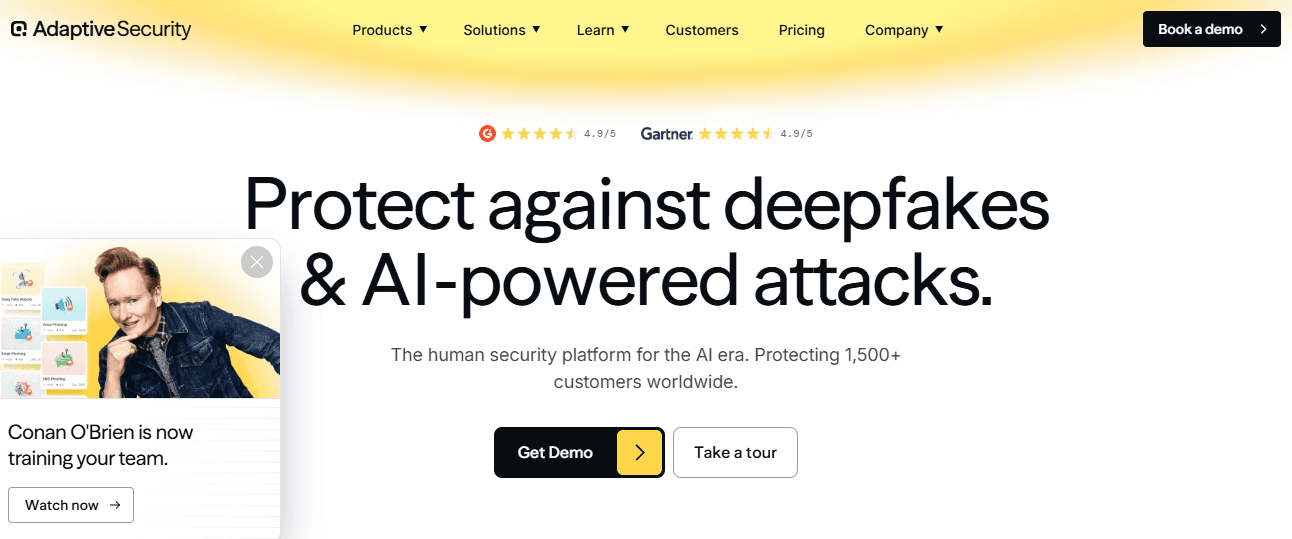
Adaptive Security has built its differentiation specifically around deepfake threats, generating AI-driven deepfake and phishing simulations. It's a strong option if deepfake risk is your primary concern, though its scope is narrower than platforms built for full multi-channel coverage.
Where it falls short: Deepfake-first positioning means less emphasis on rounding out SMS and voice-based simulation as a standalone, continuous program.
Ideal for: Teams whose most urgent concern is deepfake-based social engineering specifically, rather than broad multi-channel risk coverage.
5. SoSafe
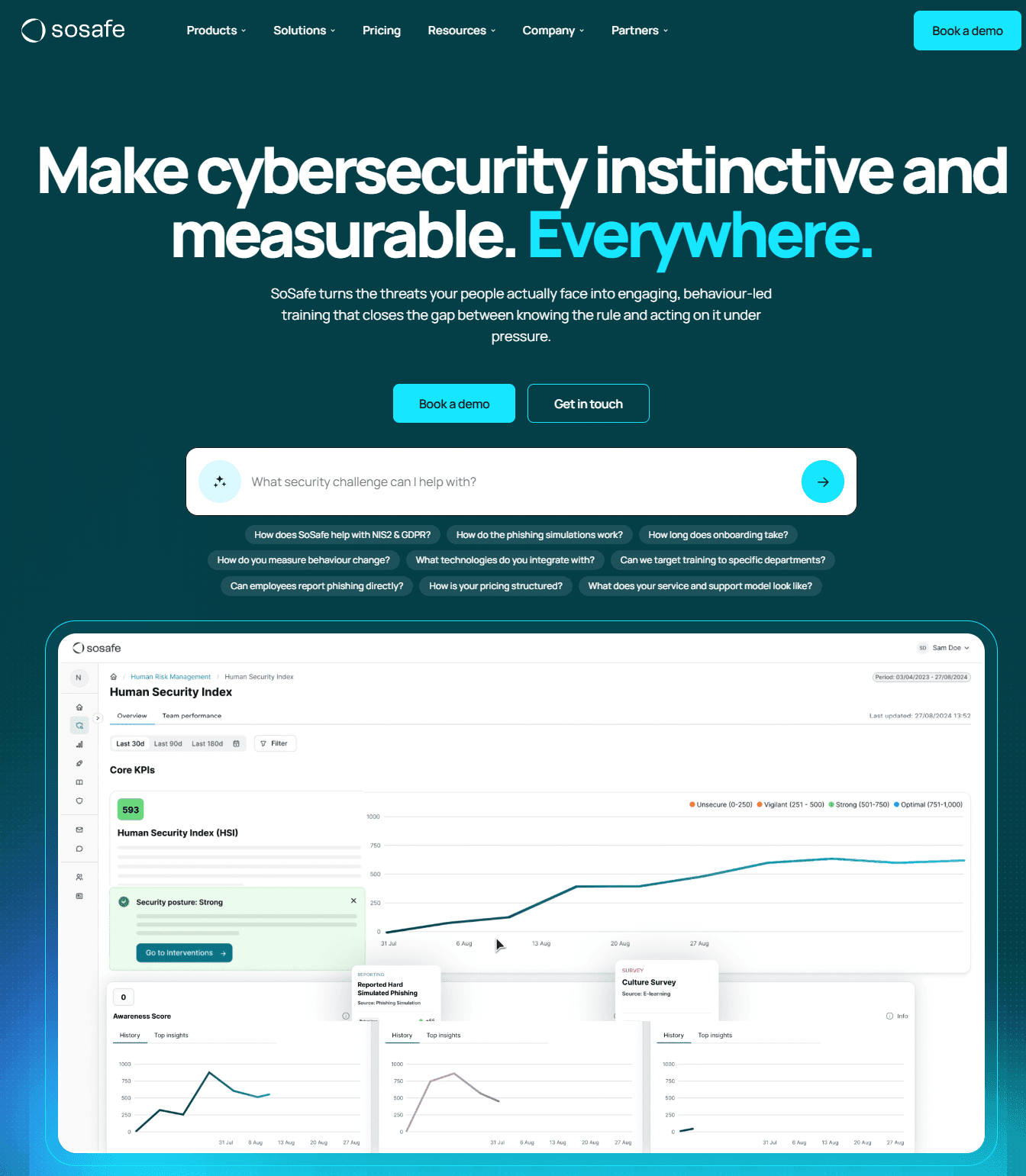
SoSafe is a European-founded security awareness and phishing simulation platform with strong presence in GDPR-conscious markets. Its simulation library is broad but centers primarily on email, with more limited coverage of voice and deepfake vectors.
Where it falls short: Voice and deepfake simulation coverage is more limited than its email simulation library, and there's no unified agent-risk model.
Ideal for: European or GDPR-focused organizations that want a mature phishing simulation library with strong regional compliance fit.
6. Proofpoint
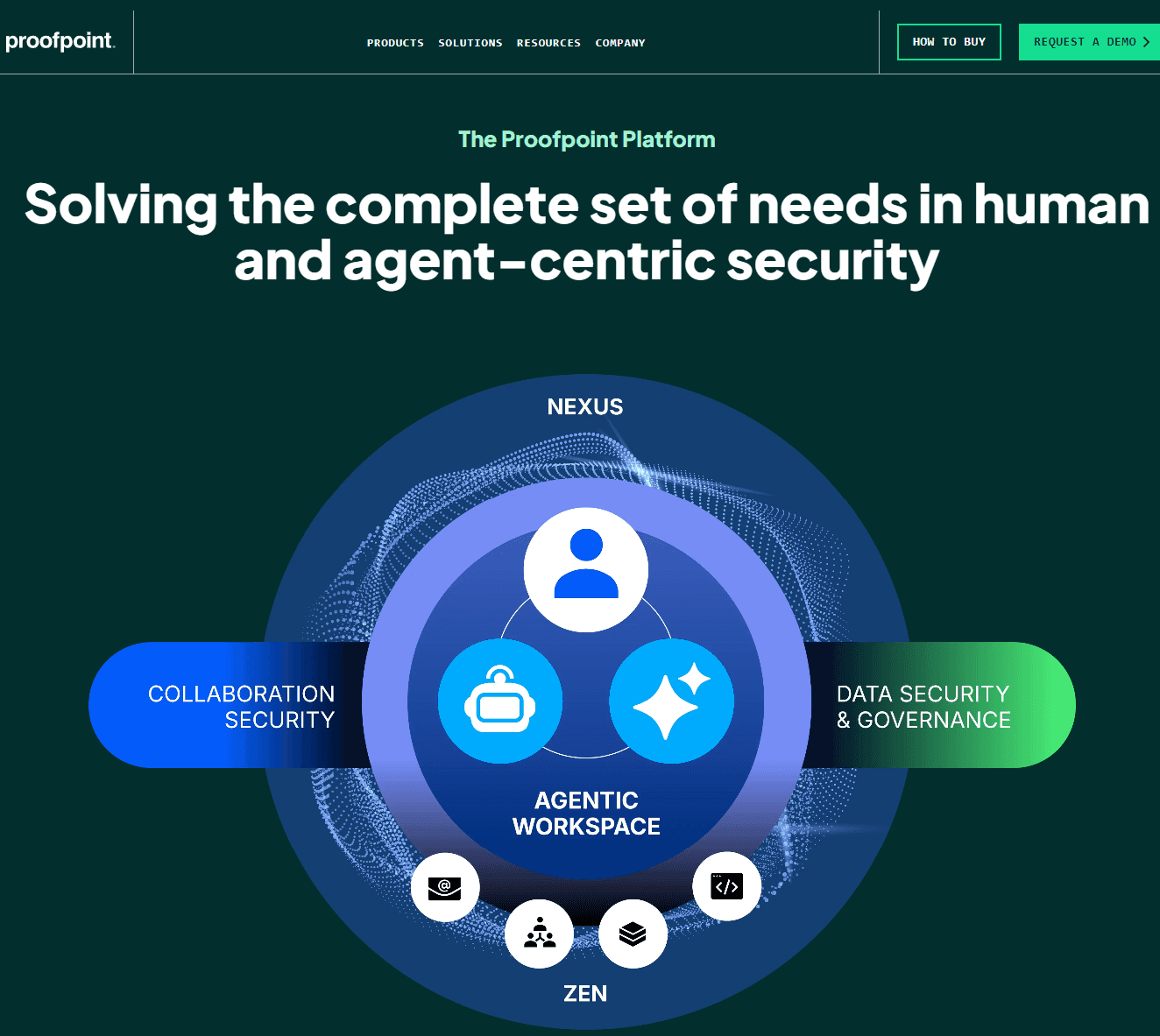
Proofpoint's security awareness training pairs phishing simulations with its own threat intelligence, using real attack data the company has already blocked to inform simulation content and training modules. It's a strong fit for organizations that want simulation content grounded in threat-intel visibility, though coverage centers on email rather than voice or deepfake channels.
Where it falls short: Simulation content is strongly threat-intel-driven but centers on email; voice, SMS, and deepfake simulation are not the platform's primary focus.
Ideal for: Organizations already invested in Proofpoint's broader email security stack who want simulation content informed by real blocked-attack data.
7. Huntress

Huntress offers fully managed phishing simulation and security awareness training, built primarily for MSPs and lean IT teams that don't want to run campaigns themselves. Training content includes some vishing (voice phishing) awareness material, but the platform's core simulation engine is email-based, delivered as part of a broader managed security suite that also includes EDR and identity threat detection.
Where it falls short: Vishing content is awareness-based rather than active vishing simulation, and the platform's simulation engine is primarily email-driven within a broader managed security bundle.
Ideal for: MSPs and lean IT teams that want phishing simulation fully managed for them alongside EDR and identity threat detection, rather than run in-house.
8. Abnormal Security

Abnormal Security takes a different approach entirely: rather than running phishing simulations, it's a behavioral AI email security platform that detects and blocks socially engineered attacks in real time by modeling normal communication patterns. It's worth including here because its founders also built Fable Security, but Abnormal itself is a detection platform, not a simulation or training platform. It has recently begun moving toward human-risk-adjacent features like an AI Phishing Coach.
Where it falls short: It doesn't run phishing simulations or deliver structured training at all, so it doesn't function as a standalone HRM replacement for teams that need testing and training in one platform.
Ideal for: Organizations that primarily want real-time detection and blocking of socially engineered email attacks, as a complement to (not a replacement for) a simulation and training program.
Fable Security vs. Cimento: A Side-By Side Comparison
That distinction matters most on two fronts:
Capability | Fable | Cimento |
Channel coverage | Delivers interventions through email and Slack. | Simulates attacks across email, SMS, voice, and deepfake, reflecting the multi-channel tactics used in modern social engineering campaigns. |
Agent risk modeling | Does not offer a unified per-person risk model spanning both humans and AI agents. | Treats agent risk as part of the same per-person risk score, since an agent's exposure is tied to the individual who configured it. Rather than creating a separate agent-risk product, it unifies human and agent risk into a single model. As of this writing, no major competitor, including Fable, provides this unified per-person approach. |
Read Read:
Top 10 Hoxhunt Alternatives for Human Risk Management (2026)
8 Best KnowBe4 Alternatives for Human Risk Management (2026)
How to Choose the Right HRM Platform
There's no universal answer here, it depends on what you're actually trying to reduce risk against. A few starting questions worth asking any vendor, including Cimento:
Does the platform test real attack channels, or infer risk from existing tools you already own?
How does it handle voice and deepfake threats, not just email?
Is AI agent risk treated as a first-class part of the model, or bolted on separately?
Can you get one continuous risk score per person, across every channel?
What's the actual time-to-value: weeks of campaign setup, or a platform that runs automatically?
Choosing a Platform Built for Every Channel
Fable Security has real strengths in behavior-shaping content and signal synthesis. But if your risk model needs to cover voice, SMS, and deepfake attacks, not just the channels where telemetry already exists, and you need AI agent risk treated as part of the same person-level score rather than a separate product, it's worth seeing how Cimento's approach compares directly. Book a demo to see a living risk profile built from real multi-channel simulation, not inferred from existing tools.
FAQs About Fable Security Alternatives
1. Is Fable Security the same as KnowBe4?
No. Fable Security and KnowBe4 are both Human Risk Management (HRM) platforms, but they differ in approach: Fable centers on synthesizing existing security telemetry to trigger behavior-shaping interventions, while KnowBe4's roots are in scheduled phishing campaign simulation with a large training content library.
2. What's the difference between Fable Security and Cimento?
Fable infers risk primarily from passive signals across identity, cloud, and productivity tools. Cimento actively runs multi-channel attack simulations, email, SMS, voice, and deepfake, and builds each employee's risk profile from real simulated behavior, then extends that same model to AI agents.
3. Does Fable Security run phishing simulations?
Fable's public materials emphasize signal synthesis and AI-generated interventions over campaign-based simulation, though the company has published research referencing mobile phishing simulation data. Its core mechanism is behavior-shaping content delivery rather than broad multi-channel attack simulation.
4. How much does Fable Security cost?
Fable Security does not publish pricing publicly. Pricing typically depends on employee count and deployment scope, as is standard across the HRM category.
Key Takeways
Compare platforms based on attack-channel coverage, not just phishing email capabilities.
Look for continuous, unified risk scoring that reflects employee behavior across multiple channels.
Ensure AI agent exposure is incorporated into the same risk model as human behavior.
Prioritize platforms that actively test risk through adaptive simulations instead of relying only on passive security signals.
Choose the solution that best aligns with your organization's attack surface, integration needs, and security maturity.


