

Highlights
62% of breaches involved the human element, despite years of awareness training.
AI coding agents create a new attack surface most training platforms still ignore.
Traditional SAT measures completion, while Human Risk Management measures real behavioral risk.
10 Best Security Awareness Training Platforms for Technology Companies (2026)
Your engineers hold more access than almost anyone else at the company: production, the repo, the cloud console, and now a growing fleet of AI coding agents wired into all three. A generic security awareness training program built for an office of email users doesn't touch that exposure. It wasn't built to.
Verizon's 2026 Data Breach Investigations Report found the human element present in 62% of confirmed breaches, up from 60% the year before, and flagged a sharp rise in shadow AI use as one of the report's most consequential findings (Verizon DBIR 2026). For a technology company, "human element" increasingly means an engineer's agent as much as the engineer.
This guide compares the 10 platforms technology companies evaluate most in 2026, with a specific eye on what actually fits an engineering-heavy, remote-first, fast-moving org, not a generic enterprise buyer.
What Makes Security Awareness Training Different for Technology Companies
A few things separate a tech company's risk profile from a typical enterprise buyer's:
Distributed, async-first workforces. Scheduled, synchronous training campaigns fight the culture instead of fitting it.
Elevated-privilege roles are the norm, not the exception. Engineers, DevOps, and SREs carry SSO, GitHub, and cloud console access that most SAT programs never account for.
AI coding agents are a new, fast-growing exposure surface. Every agent an engineer configures and connects to a repo or an MCP server inherits that engineer's access, and can be manipulated by nothing more than a paragraph of untrusted text.
Low tolerance for admin overhead and clunky UX. Technology companies procure and roll out fast, and they expect the tools they buy to match that speed.
Gartner's cybersecurity trend guidance for 2026 named this shift directly, warning that generative AI is breaking traditional awareness tactics and recommending a move toward adaptive training that explicitly covers AI-specific tasks and misuse, not just phishing (Gartner, 2026 Cybersecurity Trends). That's the gap most vendors on this list haven't closed yet.
How We Evaluated These Platforms
We weighted the list on:
Fit for engineering-heavy, remote-first cultures over generic enterprise fit.
Coverage beyond email: vishing, smishing, deepfake, and where relevant, AI agent exposure.
Integration depth with the identity and dev tooling stack (SSO/IdP, SIEM, GitHub, cloud consoles).
Behavior measurement as the core metric.
Rollout speed and admin burden, since technology companies rarely have a dedicated SAT administrator.
Platform Comparison Overview
Platform | Best fit | Primary focus |
Cimento | Engineering-heavy tech companies running AI coding agents | Human Risk Management, including agent exposure |
Hoxhunt | Orgs prioritizing measurable behavior change | Adaptive, gamified phishing simulation |
KnowBe4 | Large, multinational tech companies | SAT content breadth and compliance |
Proofpoint | Tech companies standardized on Proofpoint email security | SAT bundled with email threat intel |
Abnormal AI | Tech companies wanting training tied to real inbox threats | AI-native email security with a training layer |
Adaptive Security | Tech companies worried about deepfakes and AI-generated attacks | Multi-channel, risk-scored simulation |
Huntress | Smaller tech companies working through an MSP | Fully managed SAT bundled with EDR/ITDR |
SoSafe | European tech companies needing local-language, GDPR-aligned training | Behavioral-science-based SAT |
Cofense | Tech companies with a mature SOC | Phishing reporting and triage |
MetaCompliance | Compliance-driven tech companies (SOC 2, ISO 27001) | Policy management and regulatory training |
The 10 Best Security Awareness Training Platforms for Technology Companies
1. Cimento
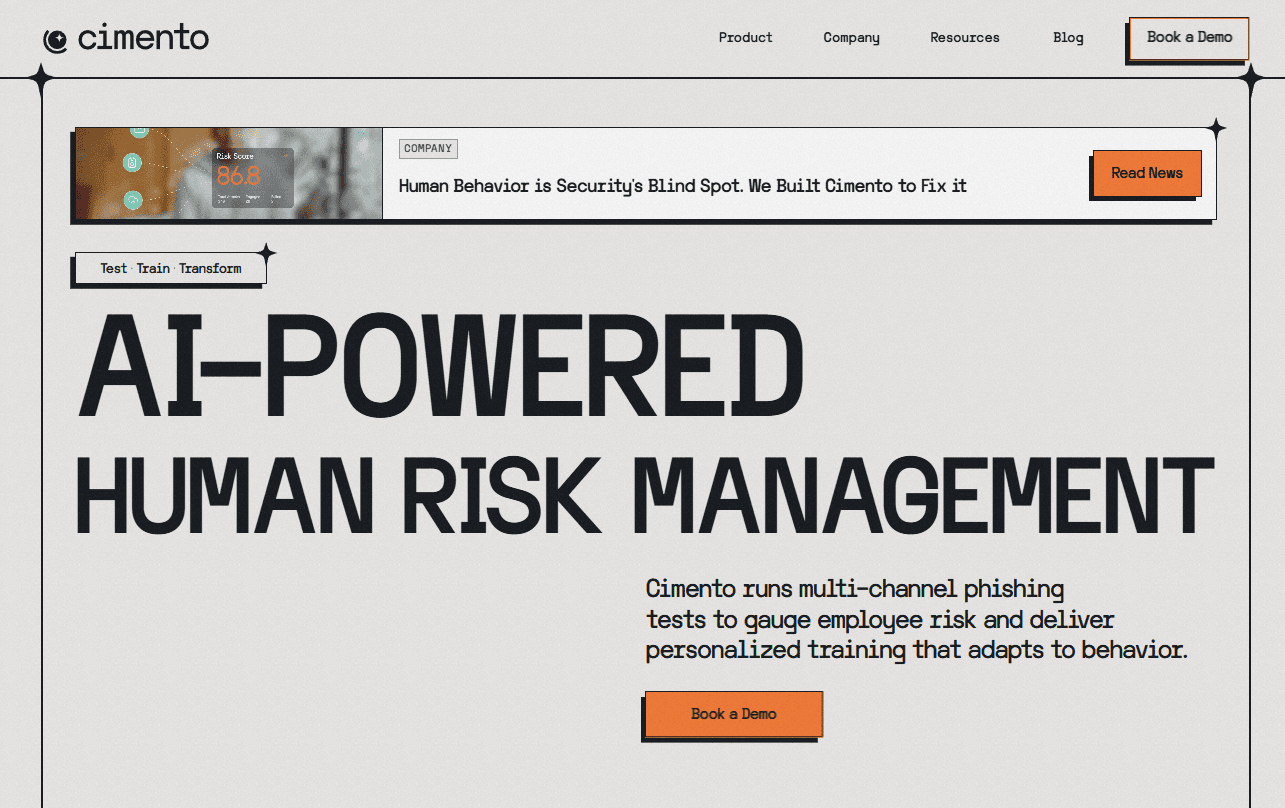
What it is: Cimento is a Human Risk Management platform built on a single premise: the risk a person creates doesn't stop at their own clicks anymore. It scales through every AI agent they configure, connect, and point at company systems.
Cimento measures human exposure the way HRM always has, through behavior and access, and extends that same model to the coding agents and MCP-connected tools engineers run every day.
Why it's different for technology companies: Most platforms are built for a workforce that opens email. Technology companies have a second, faster-moving population: engineers running AI coding agents against production repos and cloud infrastructure.
Cimento's Agent Hub maps each person's agent exposure from configuration and telemetry, then uses simulation to confirm which of those exposures an attacker could actually trigger, before recommending any governance or runtime control.
Strong features:
Human risk scoring extended to AI agent and MCP exposure through Agent Hub
Config- and telemetry-based exposure mapping, validated by simulation
AI Content Studio for building training content around company-specific policy and context
Continuous, behavior-based measurement rather than annual campaigns
Multi-channel simulation spanning email, SMS (smishing), and voice (vishing), often run as multi-step sequences rather than single, isolated phishing attempts
Best fit: Technology companies with active AI coding agent adoption, where the least-measured risk isn't the sales team's inbox but engineering's stack. See it live.
2. Hoxhunt
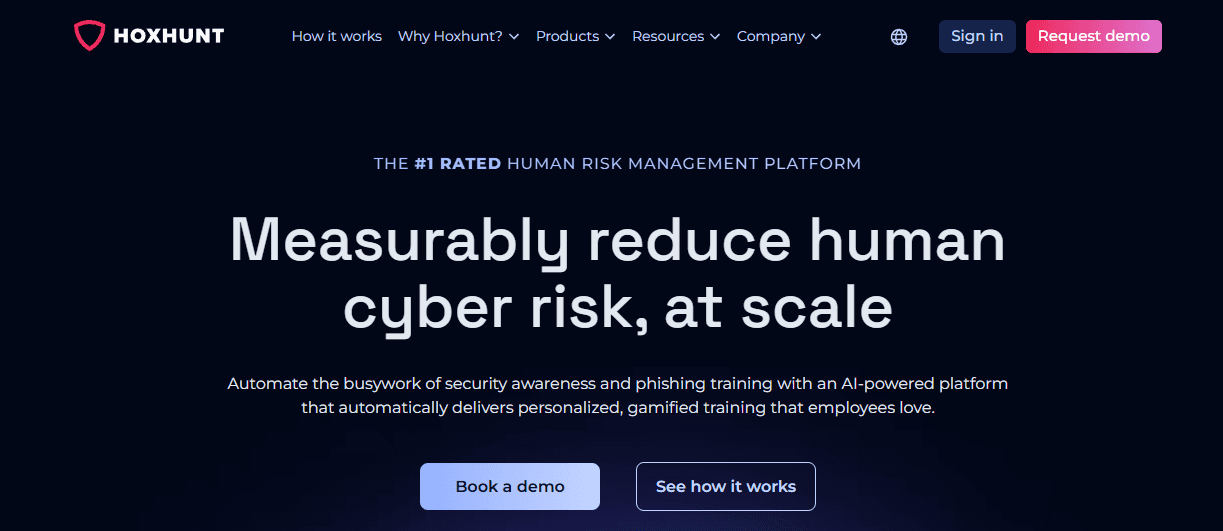
What it is: Hoxhunt is a Human Risk Management platform built around adaptive, AI-driven phishing simulations, role-based microlearning, and gamification. Difficulty adjusts to each employee's performance, and reporting rates feed directly into risk scoring.
Strong features:
AI-generated, multi-vector simulations (email, and increasingly Teams, SMS)
Gamified engagement mechanics: points, badges, leaderboards
Reporting-rate-driven risk scoring rather than pure completion tracking
Best fit: Tech companies whose main blocker is employee engagement, and who want gamification to sustain participation over a compliance-only program.
3. KnowBe4

What it is: KnowBe4 is the most established name in the category, built around a large training content library, phishing simulation templates, and compliance-oriented reporting.
Strong features:
A library of 25,000+ training and phishing templates, with support for 35+ languages. Broad SIEM, SOAR, GRC, and HRIS integrations
Deep bench of industry-specific and compliance-mapped content
Best fit: Larger, multinational technology companies with complex, multi-jurisdiction compliance requirements and the internal resources to manage a heavier platform.
4. Proofpoint
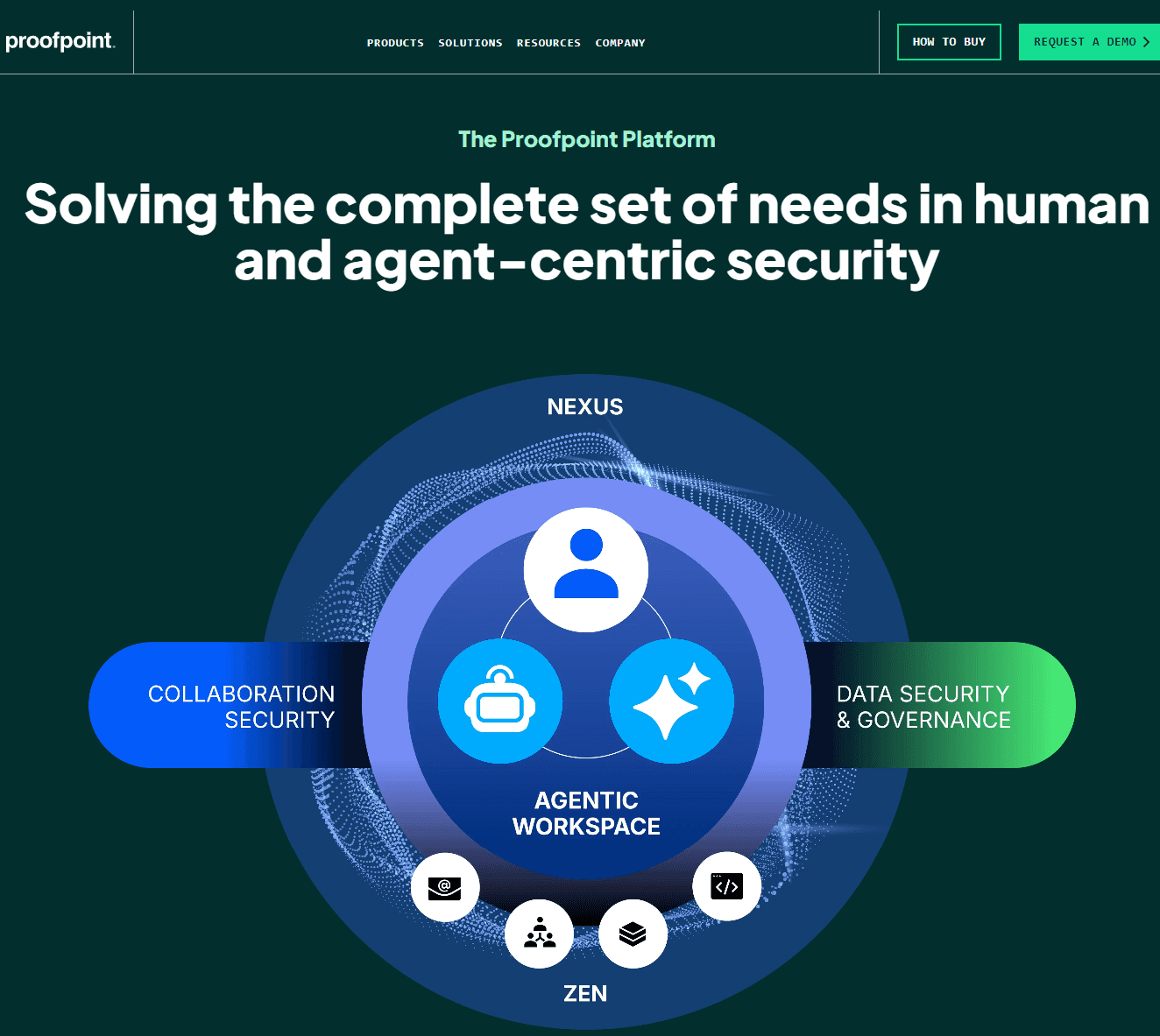
What it is: Proofpoint's security awareness offering, now branded ZenGuide, sits inside its broader email security and threat-intelligence ecosystem. Training content and simulations draw on threat intelligence from Proofpoint's own detection capabilities.
Strong features:
Threat-intelligence-informed phishing simulations
Risk segmentation and enterprise-grade reporting
Single-vendor consolidation for orgs already running Proofpoint email security
Best fit: Technology companies already standardized on Proofpoint for email security who want training and threat data in one vendor relationship.
5. Abnormal AI

What it is: Abnormal is primarily known for AI-native, behavioral email security. Its AI Phishing Coach extends that same behavioral engine into training, generating simulations and coaching from the actual attack patterns it detects targeting your organization, rather than a static template library.
Strong features:
Coaching generated from real, detected attacks rather than pre-built scenarios
API-based deployment for Microsoft 365 and Google Workspace
A dynamic risk-scoring dashboard layered on top of its core email security product
Best fit: Technology companies that already run Abnormal for inbox protection and want training tied directly to what's actually hitting their employees.
6. Adaptive Security
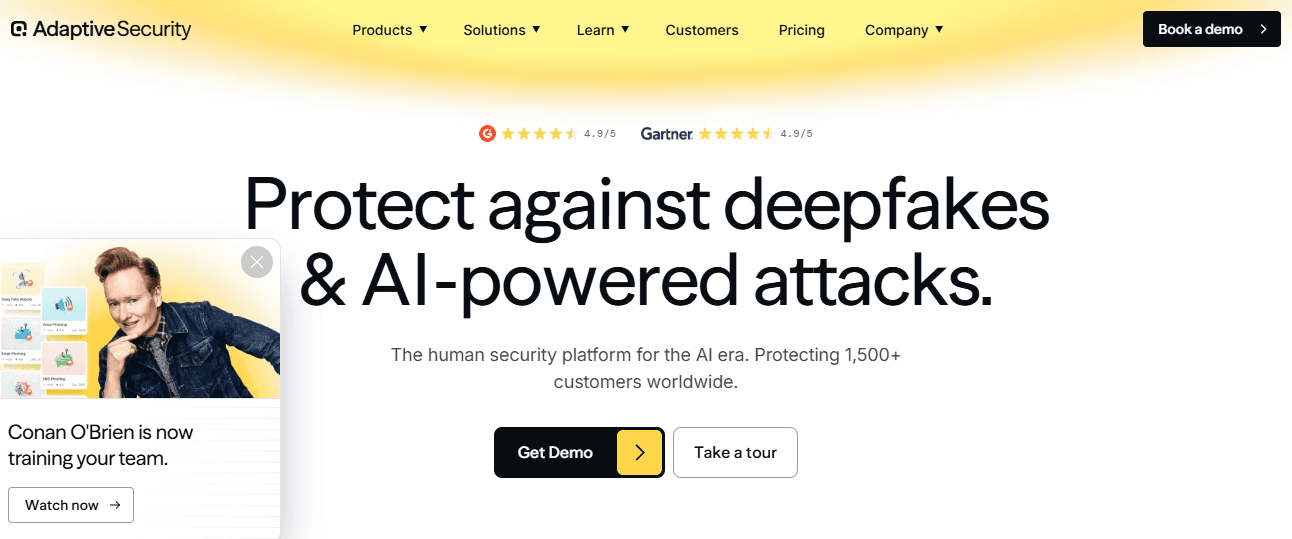
What it is: Adaptive Security was built specifically around the threats older platforms weren't designed for: deepfakes, smishing, voice spoofing, and AI-generated phishing.
Strong features:
Multi-channel coverage: email, SMS, voice, QR code, and deepfake simulation
Individual risk scoring based on job role, access level, and behavior
No-code simulation deployment for non-technical admins
Best fit: Technology companies most worried about AI-generated and deepfake-based social engineering specifically, rather than traditional email phishing alone.
7. Huntress

What it is: Huntress bundles fully managed security awareness training with its EDR, ITDR, and SIEM offering, aimed at small to mid-sized organizations and the MSPs that support them. Huntress's own security team assigns and manages the training content on an ongoing basis.
Strong features:
Fully managed content, scheduling, and phishing simulations, run by Huntress's team
Story-based training episodes built by an in-house animation team
One dashboard alongside EDR, ITDR, and SIEM
Best fit: Smaller technology companies, or those working through an MSP, that want security awareness handled with minimal internal admin time.
8. SoSafe
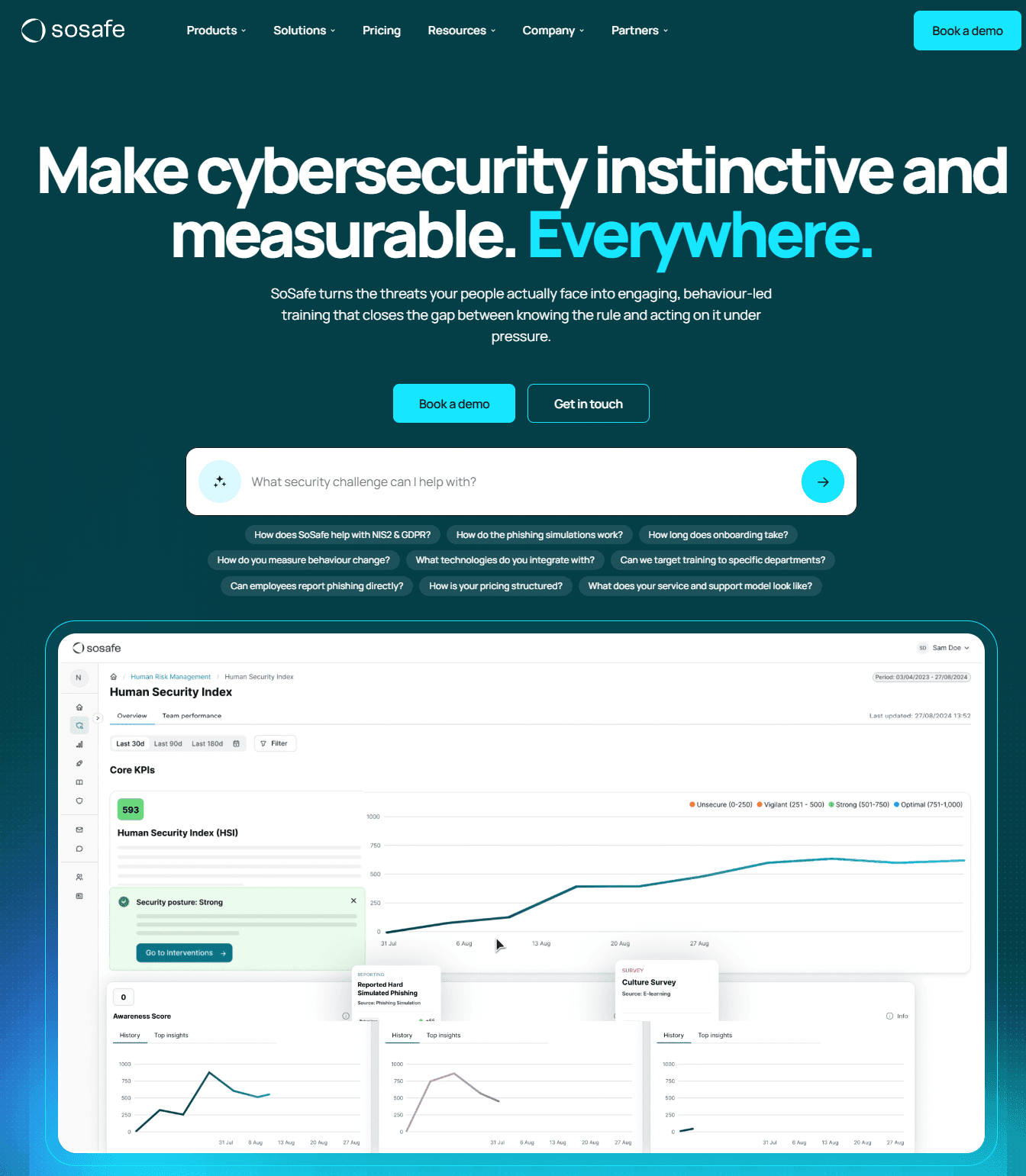
What it is: SoSafe is a European Human Risk Management platform built around behavioral science, with strong localization and GDPR-aligned data handling.
Strong features:
Clean, user-friendly interface geared toward foundational awareness programs
Multilingual content and support aligned to European working hours
Behavioral-science grounding for its training design
What to watch: Reviewers generally describe a smaller content library and less realistic simulations than category leaders, better suited to foundational programs than advanced, adversarial testing.
Best fit: European technology companies prioritizing GDPR-aligned data residency and multilingual rollout over the most aggressive simulation realism.
9. Cofense
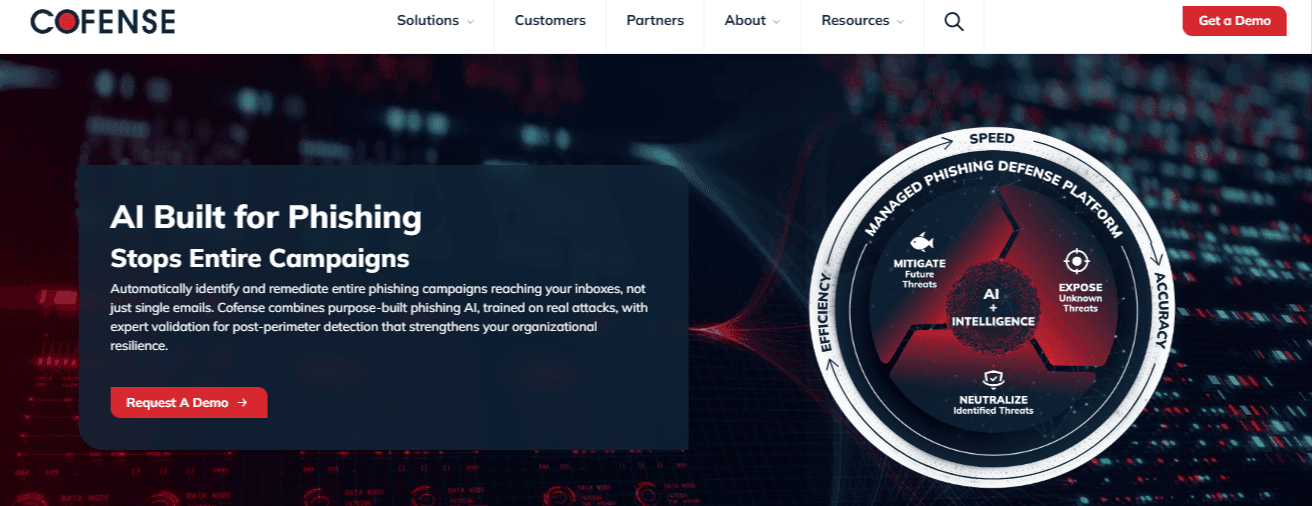
What it is: Cofense is built around phishing detection, reporting, and response rather than broad-based training. Its core strength is the report button and the triage workflow behind it, which routes suspicious emails to security teams for fast analysis.
Strong features:
Phish-reporting workflow tightly integrated with incident response
Real-world threat visibility drawn from what employees actually report
SOC-aligned triage and response tooling
Best fit: Technology companies with a mature, in-house SOC that want the report-to-response pipeline as the primary value, paired with a separate training program.
10. MetaCompliance
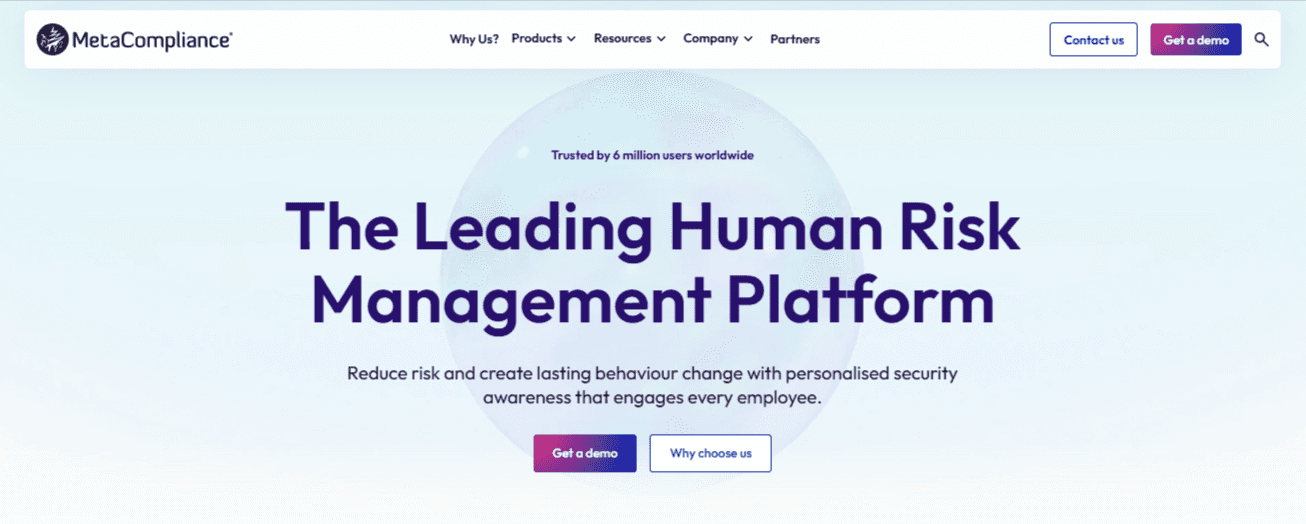
What it is: MetaCompliance centers on compliance-driven training with strong policy management and regulatory reporting, aimed at organizations that need to demonstrate audit-readiness as much as behavior change.
Strong features:
Policy management and acceptance tracking tied to compliance frameworks
Regulatory-aligned reporting for audits
Governance workflows layered alongside training content
Best fit: Technology companies where SOC 2, ISO 27001, or similar audit requirements are the primary driver, and simulation sophistication is a secondary concern.
What to Choose for a Tech Company: Security Awareness Training vs. Human Risk Management
Traditional security awareness training asks one question: did everyone finish the module? Human Risk Management asks a different one: how exposed is this organization right now, and what should we do about it?
For a technology company, that second question can't stop at the inbox. It has to include the AI agents your engineers are running against your repos, your cloud console, and your internal tools.
An agent doesn't decide to click a bad link, but it inherits every permission the person who configured it holds, and it can be manipulated by nothing more sophisticated than a paragraph of untrusted text placed in its path.
None of the SAT-first or compliance-first platforms on this list currently measure that surface. It's the gap Cimento was built to close.
Best Security Awareness Training for Technology Companies, by Use Case
If your priority is… | Strongest fit | Why |
Measuring AI agent and coding-agent exposure | Cimento | Only platform treating agent risk as delegated employee exposure |
Measurable behavior change and engagement | Hoxhunt | Adaptive, gamified simulations with reporting-rate scoring |
Largest ready-made content library, multinational rollout | KnowBe4 | Broadest template library and language support |
One vendor for email security and training | Proofpoint or Abnormal AI | Shared threat intelligence across both products |
Deepfake and AI-generated attack readiness | Adaptive Security | Built specifically around emerging AI threat channels |
Minimal internal admin overhead | Huntress | Fully managed program, bundled with EDR/ITDR |
European data residency and localization | SoSafe | GDPR-aligned, multilingual by design |
A report-to-SOC pipeline | Cofense | Strongest phishing triage and response workflow |
Compliance and audit-readiness (SOC 2, ISO 27001) | MetaCompliance | Deepest policy and regulatory reporting workflow |
FAQs About Security Awareness Training Platforms for Technology Companies
1. Do engineers need different security awareness training than the rest of the company?
Yes. Engineers typically hold elevated access to production systems, source code, and cloud infrastructure, and increasingly run AI coding agents connected to that same access. A program built around generic phishing templates doesn't address that exposure.
2. Does security awareness training cover AI coding agent risk?
Most platforms on this list don't, yet. They're built around email, SMS, and voice-based social engineering aimed at people directly. Cimento is currently the platform on this list that extends risk measurement to the AI agents an employee configures and connects.
3. What should a remote-first technology company look for in a platform?
Async delivery over scheduled live sessions, strong SSO/IdP integration, and reporting that reflects behavior change rather than course completion, since remote-first cultures typically resist mandatory synchronous training.
4. Is security awareness training still worth it if we already meet compliance requirements?
Compliance proves people attended training. It doesn't prove behavior actually changed. Verizon's 2026 DBIR found the human element present in 62% of confirmed breaches even after years of industry-wide investment in awareness programs, which suggests completion-focused training alone isn't closing the gap.
5. How much does security awareness training cost for a technology company?
Pricing varies widely by vendor, seat count, and channel coverage, and most vendors quote custom pricing for anything beyond a small team. Treat any published per-seat figure from a vendor's own site as a starting point to confirm in a demo, not a final number.
6. What's the difference between security awareness training and Human Risk Management?
Security awareness training measures whether people completed a course. Human Risk Management measures and continuously reduces the risk created by actual behavior, including, for technology companies, the behavior of the AI agents that behavior now extends to.
Key Takeways
Choose a platform that measures and reduces real human risk, not just training completion.
Prioritize solutions that cover modern attack channels, including voice, SMS, deepfakes, and AI agents.
Match your platform to your organization's needs, whether that's compliance, engineering security, or behavior change.
Look for integrations with your identity, cloud, and developer tools to reduce administrative overhead.
Continuously validate employee behavior with adaptive simulations instead of relying on annual awareness campaigns.


