

Highlights
100% training completion proves little about whether employees are actually exposed to attack.
Regulated buyers need audit-ready evidence, not just course completion and phishing results.
Email-only simulations miss major attack channels, including voice, SMS, and deepfake attacks.
Best Security Awareness Training for Regulated Industries (2026)
If you work in finance, healthcare, or insurance, a security awareness training platform has to satisfy two different audiences at once: your employees, who need to actually change behavior, and your examiner, who needs a paper trail proving you tried. Most vendors are built for one and bolted onto the other. That gap is where a lot of regulated-industry SAT programs quietly fail an audit.
This list evaluates the best security awareness training for regulated industries on the criteria that actually matter to a compliance buyer: framework-mapped reporting, multi-channel attack coverage, and evidence that holds up when someone outside your security team asks to see it.
What Regulated Industries Need From Security Awareness Training
A general SAT buyer asks whether completion rates went up. A regulated buyer asks whether the program would survive a SOC 2 audit, a HIPAA risk assessment, or a FINRA exam. Those are different questions, and they change what "best" means.
Four things separate a compliance-ready platform from a generic one:
Framework-mapped, audit-ready reporting. Reports that map to SOC 2, HIPAA, GLBA, NYDFS, or FINRA controls out of the box, not a CSV export you have to translate yourself.
Multi-channel coverage, not just email. Regulated organizations are high-value targets for pretexting that never touches an inbox. The 2026 Verizon DBIR found phone-based attacks like voice and SMS, succeeded at roughly 40% higher rates than email-based campaigns in simulation data, and flagged synchronous pretexting, where an attacker impersonates a help desk agent or vendor and walks an employee through a harmful action in real time, as a driver behind several major ransomware incidents this year.
Behavior-based risk measurement, not just completion tracking. A 100% completion rate tells an examiner nothing about actual exposure. A risk score tied to real behavior does.
Integration with the systems compliance already runs on. HRIS for org context, SIEM for signal, IDP for access, so the program produces continuous evidence instead of a once-a-year snapshot.
Regulated-Industry SAT Platforms at a Glance
Vendor | Multi-channel simulation | Compliance framework mapping | Behavior-based risk scoring | Best for |
Cimento | Email, SMS, voice, deepfake | Emerging | Continuous | Compliance teams wanting a unified human + agent risk score |
KnowBe4 | Primarily email | Extensive, mature | Limited | Buyers who want the broadest content library |
Proofpoint | Primarily email | Strong (email-security-led) | Limited | Teams consolidating email security and training |
Cofense PhishMe | Primarily email | Moderate | Limited | Regulated/gov-adjacent phishing simulation depth |
SoSafe | Email, some SMS | Strong (EU-focused) | Moderate | Multinational orgs with EU regulatory exposure |
Hoxhunt | Primarily email | Moderate | Moderate | Employee engagement and adaptive difficulty |
Adaptive Security | Email, deepfake-focused | Emerging | Moderate | Deepfake/synthetic-media fraud exposure |
Huntress | Moderate | Limited | Smaller regulated orgs bundling MDR and training |
The Best Security Awareness Training for Regulated Industries
Cimento
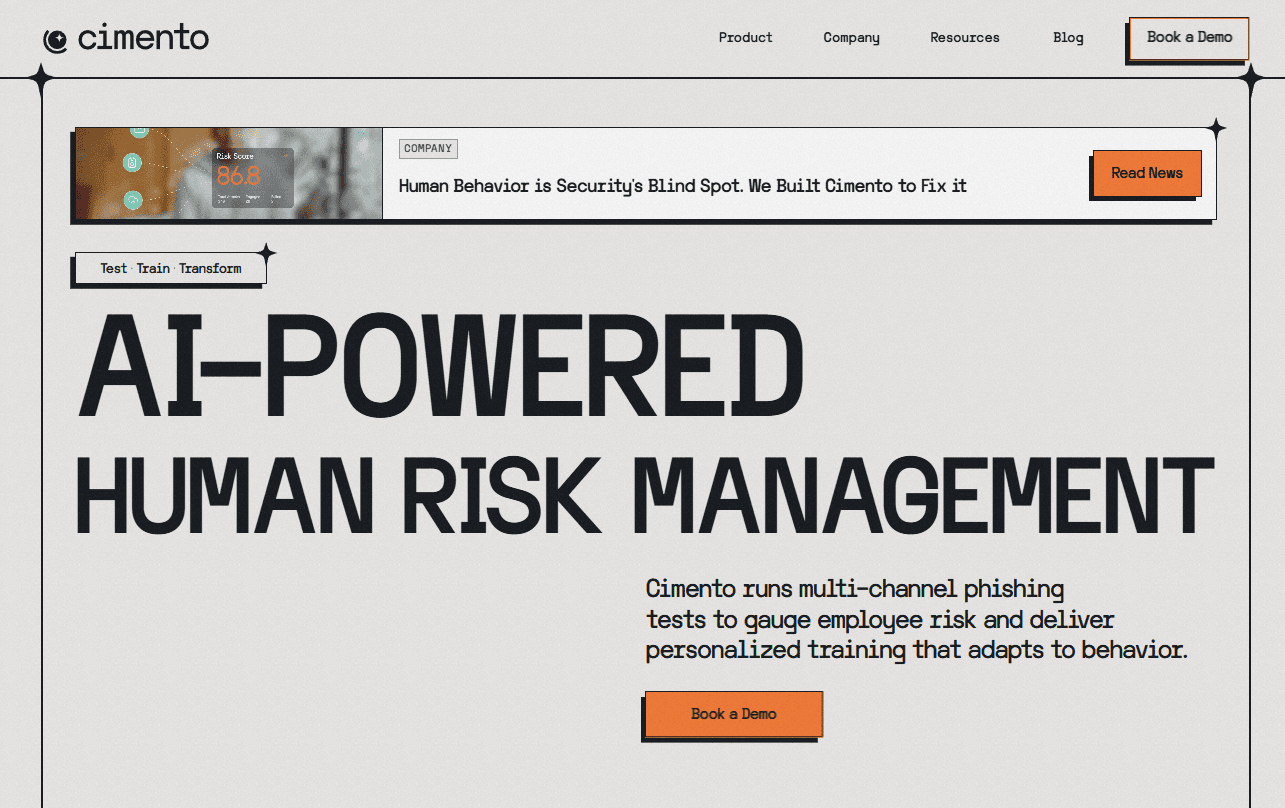
Cimento is built around continuous, behavior-based risk measurement rather than one-time training completion. It runs multi-channel simulation across email, smishing, vishing, and deepfake scenarios, which matters directly for regulated buyers given how much pretexting activity now happens outside email entirely.
What it offers:
Continuous, behavior-based risk measurement. Cimento doesn't wait for a campaign to tell you who's exposed. Risk is measured living, in real time, from actual behavior and configuration, not a quarterly snapshot.
Agent risk as delegated employee exposure. Config and telemetry map where each person's agents are exposed. Simulation confirms which of those exposures an attacker could actually trigger. This is a gap nobody else on this list addresses.
Measurement before control. Cimento is a risk company before a controls company. Governance and runtime blocking come once the data justifies them, not as a default reach that slows every employee down to catch the few who are actually exposed.
Multi-channel simulation, covering the email, SMS, voice, and deepfake scenarios that are now standard across the category, without treating realism as the whole story.
Read about real teams who got real results with Cimento: See Customer Stories
KnowBe4

KnowBe4 is the incumbent most regulated buyers already have on their shortlist. It has the broadest content library in the category and a long compliance track record, including modules built around specific frameworks.
Where it falls short for compliance-first buyers is that its core model is still training-and-phishing-simulation-completion, and reporting leans toward activity metrics rather than a continuous, behavior-based risk score an examiner can act on.
Proofpoint
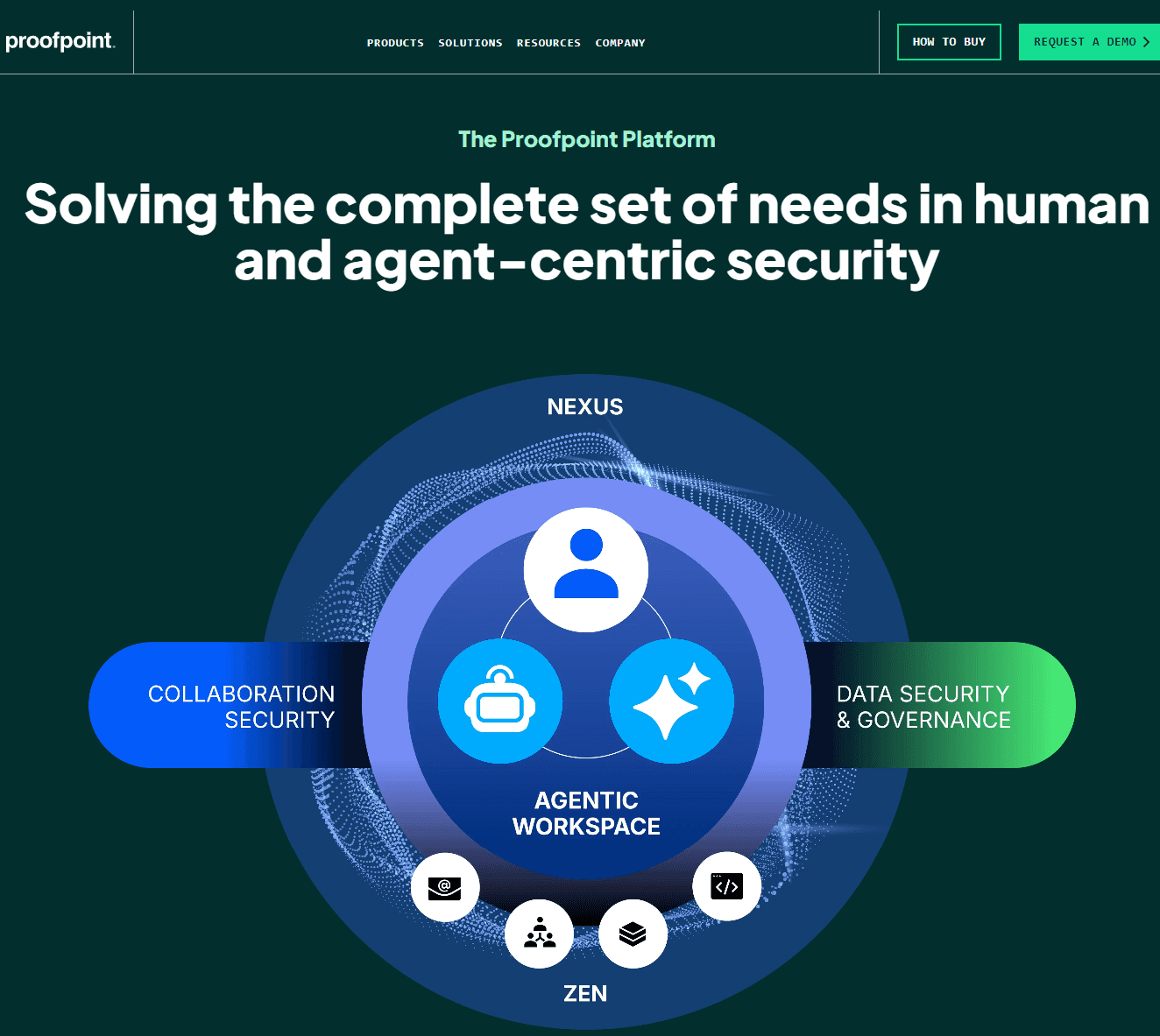
Proofpoint's strength is that it isn't a standalone SAT tool, it's threat intelligence and email security with awareness training layered on top, which gives regulated buyers a single vendor relationship for both prevention and training.
That's a real advantage for consolidation-minded security teams in finance and healthcare. The tradeoff: its awareness training module is secondary to its email security product, and multi-channel simulation outside of email is not its focus.
Cofense
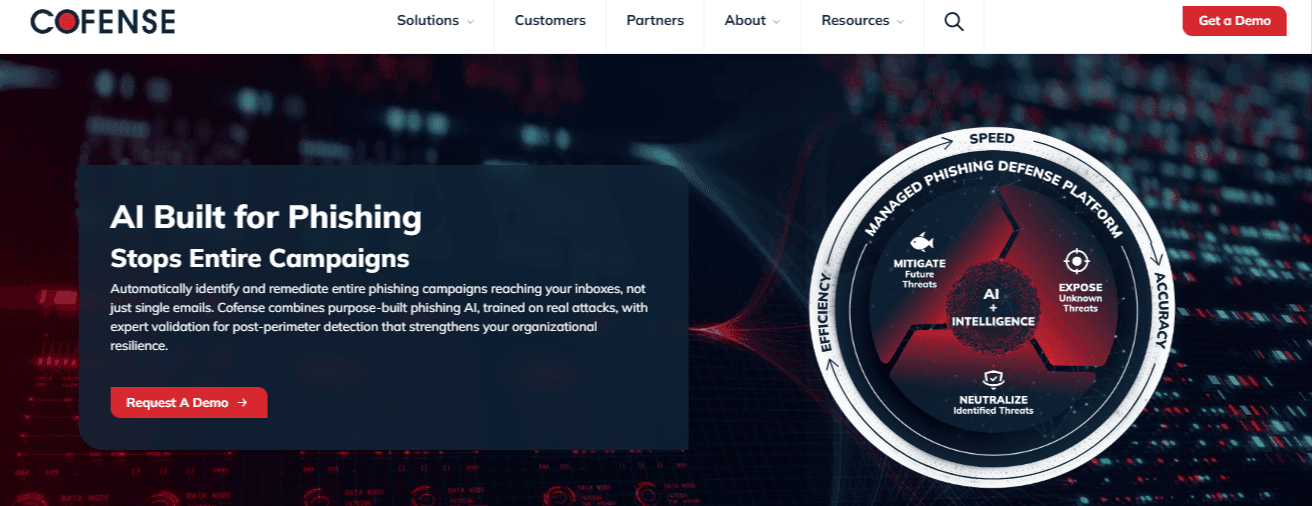
Cofense built its reputation on realistic, frequently-updated phishing simulations and has long-standing traction in regulated and government-adjacent environments.
It's a strong pick for organizations whose primary compliance concern is proving they run rigorous, current phishing simulations. It's narrower on non-email channels and on the kind of unified, cross-channel risk scoring that newer platforms are built around.
SoSafe
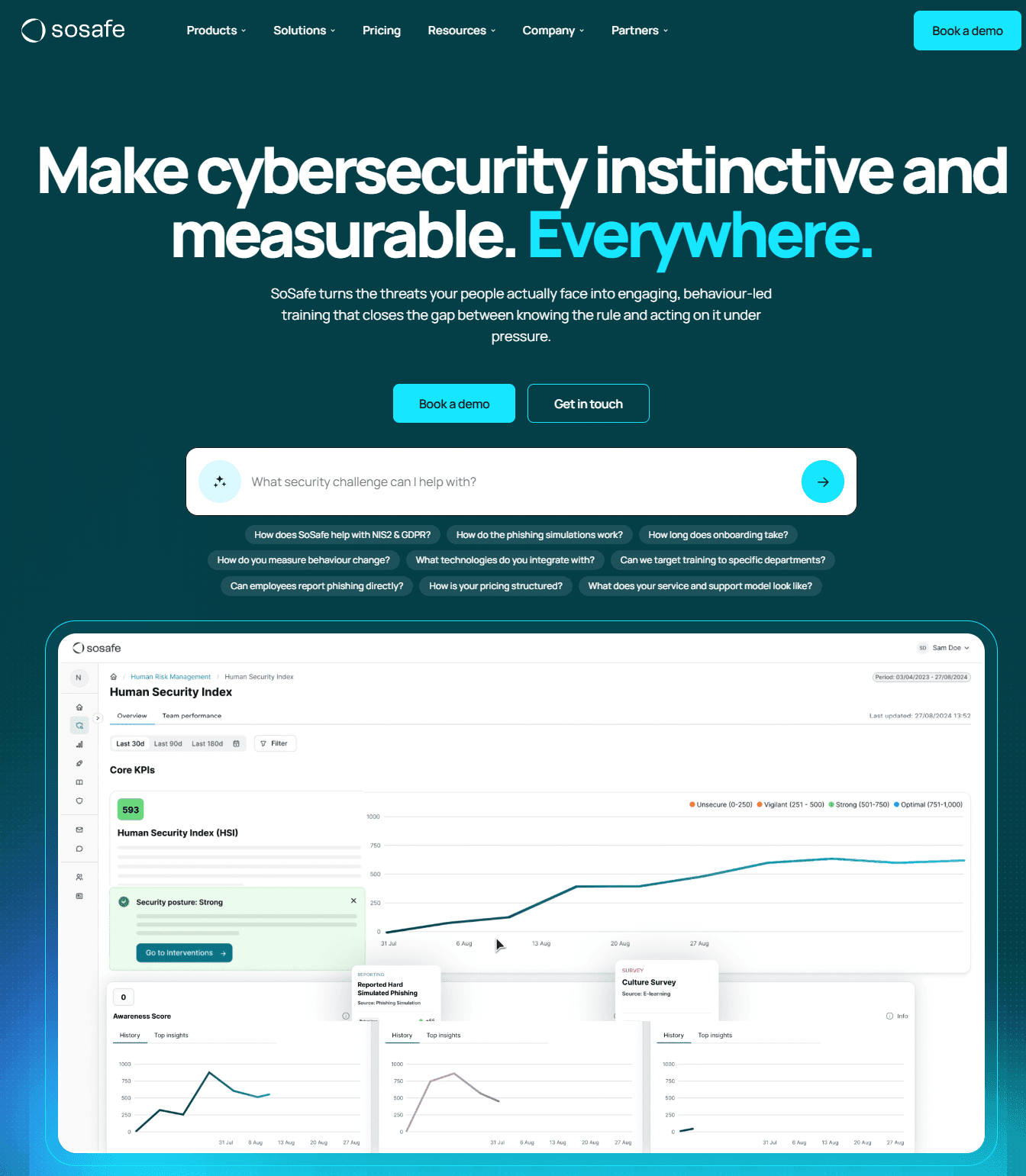
SoSafe has strong compliance credentials for organizations with European regulatory exposure - GDPR-aligned by design, with reporting built around EU frameworks.
That makes it a natural fit for multinational financial and healthcare organizations with EU operations. US-regulated buyers evaluating it against FINRA, HIPAA, or NYDFS requirements specifically should confirm framework coverage directly, since its reporting defaults skew European.
Hoxhunt
Hoxhunt is built around gamified, adaptive phishing simulations that personalize difficulty to each employee, which drives strong engagement numbers.
For a regulated buyer, the open question is whether engagement metrics translate into the kind of audit-ready risk reporting a compliance team can hand to an examiner without additional work.
Adaptive Security
Adaptive Security has leaned into AI-generated and deepfake-based simulation, which is directly relevant to regulated industries given how much fraud attempts in finance and healthcare now involve synthetic voice or video.
It's a newer entrant, so buyers should weigh its deepfake-specific strength against a shorter compliance track record than the older incumbents on this list.
Huntress

Huntress is best known as a managed detection and response platform for small and mid-sized businesses, with security awareness training as part of a broader managed security offering.
That bundling can work well for smaller regulated organizations like a community bank or regional healthcare provider, that want detection and awareness under one contract. It's a weaker fit for larger regulated enterprises that need SAT as a dedicated, deeply configurable program rather than an add-on.
How to Evaluate SAT Vendors for Compliance Requirements
Before you sign, get direct answers to these questions from any vendor on this list:
Can you export a report mapped directly to our framework: SOC 2, HIPAA, GLBA, NYDFS, or FINRA, without manual reformatting?
What happens outside of email? Ask specifically about SMS/smishing and voice/vishing simulation, not just whether the platform "covers" those channels in marketing copy.
Is what you're measuring risk, or completion? A vendor that reports on training completion is answering a different question than one reporting on behavior-based exposure.
Does the platform integrate with our existing HRIS, IDP, and SIEM, or does it operate as a standalone system your compliance team has to reconcile manually?
How is data residency handled, particularly relevant for healthcare organizations bound by HIPAA and financial organizations with state-level requirements like NYDFS.
Where Compliance-Ready Security Awareness Training Is Headed
The vendors best positioned for regulated industries in 2026 are the ones that treat compliance reporting as a byproduct of continuous risk measurement, not a separate deliverable bolted onto a training calendar. As pretexting and multi-channel social engineering keep climbing the breach-pattern rankings in sectors like healthcare and finance, the platforms limited to email-based simulation will have a harder time proving they cover the exposure regulators actually care about.
If your organization is evaluating SAT or HRM platforms for a regulated environment, it's worth asking any vendor to show you exactly how their reporting maps to your specific framework before you sign.
Related Read:
FAQs About Security Awareness Training for Regulated Industries
1. What is the best security awareness training for regulated industries?
The right platform depends on what your compliance program prioritizes. Buyers who need framework-mapped reporting and continuous, behavior-based risk scoring across multiple channels should weight that more heavily than raw content library size when comparing vendors.
2. Does security awareness training satisfy compliance requirements like HIPAA or SOC 2?
Not entirely. Training alone doesn't satisfy a compliance requirement. The evidence it produces does. Regulators and auditors generally want to see documented, recurring training tied to measurable outcomes, not just proof that a course was assigned.
3. What's the difference between security awareness training and Human Risk Management?
Security awareness training measures whether someone completed a course. Human Risk Management measures ongoing behavior and exposure that figures out who is actually likely to be compromised, through which channel, right now, and treats training as one input into that risk picture rather than the end goal.
4. How often should regulated industries run phishing simulations?
Monthly. Most compliance frameworks expect recurring, not one-time, testing. Given how fast pretexting and multi-channel social engineering tactics are evolving a continuous simulation gives a more defensible risk picture than an annual test.
Key Takeways
Prioritize platforms that map reporting directly to your applicable compliance frameworks.
Test employees across email, SMS, voice, and deepfake channels to reflect modern attack patterns.
Measure behavioral risk and exposure rather than relying solely on training completion rates.
Integrate SAT with HRIS, identity, and SIEM systems to maintain continuous, auditable risk visibility.
Ask vendors to demonstrate exactly how their reporting supports your specific regulatory requirements before purchasing.


